Sunday, December 1, 2013

The Origins of Domestic Dogs

The Origins of Domestic Dogs

AncientWolf-Web“Evolution of dog” is explored in two scientific articles that emerged just recently. We thought you might enjoy seeing the evidence that traces the evolution of domestic dogs back to the wild wolf, starting more than 18,000 years ago.
    • Today’s domestic dogs are more closely related to ancient and now-extinct European wolves than today’s wolves, according to UCLA scientists who have completed genetic analyses and reported their findings in the November issue of Science. The website Phys.org. covered this groundbreaking news in an extensive article this month. The article quoted Robert Wayne, a professor of ecology and evolutionary biology in UCLA’s College of Letters and Science and senior author of the research, as stating, “This brings the genetic record into agreement with the archaeological record. Europe is where the oldest dogs are found.” To arrive at these conclusions, “the researchers studied 10 ancient ‘wolf-like’ animals and eight ‘dog-like’ animals, mostly from Europe, using the mitochondrial DNA of the animals, “which is abundant in ancient remains.” Professor Wayne remarked, “The domestication of predatory wolves likely occurred among ancient hunter-gatherer groups…” and, “followed the migratory patterns of early humans.” Read the complete article.
    • A related story on UK.Reuters.com picked up on the concept of how ancient European wolves evolved to become the domestic dogs we know today. The article noted, “Researcher Olaf Thalmann, from Finland’s University of Turku, stated that the division of dogs into the breeds known today took a long time, with the earliest dogs remaining similar to modern wolves. ‘Modifying a wolf into a Chihuahua is clearly a long process,’ says Thalmann.” See the Reuters story.

Veterinary technicians are the unsung heroes at every veterinary practice!


Veterinary Technicians Share Thoughts About Their Work

VTC-Web The Vet Tech Connections Facebook page has more than 15,300 “Likes” (page followers), and it’s a very lively group! We often see questions about career advancement and how to grow their skills, along with entertaining photo posts, funny comments, helpful tips and overall support.

The other day, someone asked the community for advice about becoming a Veterinary Technician as a total “newbie” who has a couple of business degrees. She received 63 (and counting) comments ranging from “do job shadowing first” to “become a practice manager.” Many of the comments were quite frank and balanced in reflecting how Veterinary Technicians feel about the joys and realities of their work.

One Veterinary Technician summed it up this way, “Be ready to endure happiness, heartache, confusion, anger, pain (mentally and physically) and many of these emotions during one day’s work. Never expect to be a hand/arm model as you will always have a scratch, bruise or bite wound somewhere. Go home sore and tired, wake up sore and tired. Yet somehow you’ll find yourself never wanting another career as long as you live!”

Many of those who commented have been Veterinary Technicians for 15+ years, and mostly said they love it. Here’s another representative comment: “All pros. No cons :0) LOVE my job and I’ve been doing this for over 20yrs.”

Wednesday, November 27, 2013

Blacklisted dog breeds at center of homeowners insurance dilemma

Blacklisted dog breeds at center of homeowners insurance dilemma

Thursday, November 07, 2013
The ABC 7 I-Team unleashes findings on an insurance trend that has dog owners howling mad. They're presented an ultimatum: choose between a beloved pet dog or insuring their home. 

Typically, the liability part of your home or renters insurance covers the actions of your pet, but dog bite claims are up and insurance companies are making changes. If you own a dog, you may be facing higher rates, or worse-- your insurer may dump you all together. Owners say it's breed discrimination and unfair, while insurance companies insist they're merely managing risk.

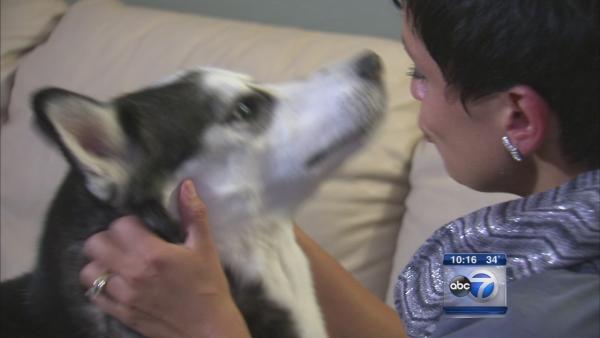
These huskies have no history of biting, but some insurance companies see nothing but teeth. While shopping around for a better homeowners rate, Melissa Ashley of Winfield, Ind., was shocked to learn her dogs had been red-flagged.

"I was mad. I was like, 'Is this a joke?' I said, 'Are you kidding me?' and he said, 'No, I'm sorry ma'am, but we can't cover you,'" said Melissa Ashley, dog owner.

Some companies have been excluding breeds for years. Ashley says her pets were never an issue before. She tells the I-Team two companies refused coverage; several others would give her a policy, but it would cost nearly double what she was now paying. Turns out her huskies are on an insurance "blacklist" of dog breeds considered aggressive and dangerous.

"It is upsetting to me to think that we could possibly be at risk to lose insurance," said Ashley.
She is not alone. Some families are being told to either lose the dog or lose insurance. Others are
having trouble getting coverage at all. Dog owners are learning it's not just the so-called "bully breeds" showing up on these lists.

An I-Team check of insurance companies finds blacklisted pets can include: chows, huskies, malamutes, akitas and great Danes. How the blacklists are compiled varies from company to company.

"It's kinda like insuring a burning building, you are not going to insure a burning building," said Loretta Worters, VP, Insurance Information Institute.

The industry claims dog bites cost insurance businesses an arm and a leg. Recently released data from the Insurance Information Institute, which represents more than 300 companies, reveals dog bites accounted for more than one-third of all homeowner liability claims paid out in 2012-- costing insurance companies nearly $490 million last year.

"This is all concrete information we are getting, numbers that show the losses and you can't dispute the numbers, it is what it is," said Worters. "Each company is different on how they are going to treat this."
Animal advocates insist it's the "bite" not the breed to fear, meaning a dog's own temperament is what's important.

The I-Team contacted ten well-known insurance companies doing business in the Midwest. Two companies admit declining homeowners coverage if the family pet is among the blacklisted breeds. The others told us they don't exclude dogs based on breed.

For example, American Family Insurance does not insure homes with certain dog breeds, saying its policy helps keeps rates affordable for all of its customers. State Farm does not refuse insurance based on breed. Instead, the company looks at the bite history of the actual dog to determine risk.
Animal shelters are now warning would-be adopters to beware.

"I've started bringing up insurance to because it's a little more out there. . .We don't want people surprised and go home and be like, 'Wait a minute, I can't have this dog because of insurance?'" said Chris Stirn, director of operations, A.D.O.P.T.

The Ashleys decided to stick with State Farm for coverage.

So you don't get caught off guard, shop around. Policies vary widely by company, state and city. Read the fine print: see if a policy excludes or limits bite claims. If so, a separate umbrella policy can provide the liability coverage lacking in your homeowners insurance. Other concerns or complaints can be directed at your state's department of insurance.

Additional information:
Insurance Information Institute

Illinois Department of Insurance
To File a complaint: http://insurance.illinois.gov/Home/ComplaintLinks.asp Illinois Insurance Association Hot Line at 800-444-3338 to see if the proper number of days notice was given for cancellation, or to find an insurance company who will insure them.

Indiana Department of Insurance (IDOI): www.in.gov/idoi
To File a complaint: http://www.in.gov/idoi/2552.htm
State of Wisconsin Office of the Commissioner of Insurance: www.oci.wi.gov
To File a complaint: https://ociaccess.oci.wi.gov/complaints-public/
American Veterinary Medicine Association: https://www.avma.org
https://www.avma.org/public/Pages/Why-Breed-Specific-Legislation-is-not-the-Answer.aspx
https://www.avma.org/KB/Resources/Backgrounders/Pages/The-Role-of-Breed-in-Dog-Bite-Risk-and-Prevention.aspx
https://www.avma.org/public/Pages/Dog-Bite-Prevention.aspx
(Copyright ©2013 WLS-TV/DT. All Rights Reserved.)

Sunday, November 24, 2013

Blind Dog, Loyal Brother Adopted

I was sent this news item....too good not to share.

Blind Dog, Loyal Brother Adopted

By Kelly Ward
|  Friday, Nov 22, 2013  |  Updated 3:34 PM CST


Ray Little, Operation Ava
These two puppies exemplify brotherly love.

The eight-month old puppies that have been melting hearts since a picture of them embracing (see below) was posted on the web a week ago are being adopted, just in time for the holidays.

Jeffrey, who is blind, and his brother Jermaine will head to their new home together on Monday, according to Operation Ava, a no-kill rescue organization in Philadelphia.
 
"The unconditional love and devotion these two dogs show is positively inspirational," wrote an SPCA spokesperson on the group's Facebook page

What's even more inspirational is the fact that Jermaine has dedicated his life to being his brother's seeing eye dog.

"I think this is a little bit extraordinary in my experience because they're so careful with one another and play together so well," said Ray Little, Director of Life Saving at Operation Ava. "Jeffrey really does try to maintain contact with Jermaine, especially when he's in an unfamiliar environment. As soon as he gets familiar with a new place, then he becomes a little bit more independent. But it's amazing how they try to maintain contact with each other."
The pups, believed to be lab-pit mixes, were found on a Philadelphia street in October and were taken in by Operation Ava.

The rescue organization received more than 10,000 inquires and multiple applications after the photo of Jeffrey and Jermaine hugging while sleeping was posted by the Chester County SPCA on Friday, Nov. 15. They were able to place the dog brothers in the same home.
Jeffrey and Jermaine reached celebrity status when the photo, and a video produced by Drexel Hill native Tom Hickey caught the attention of Ryan Seacrest who posted the heartwarming story on his website.

For more information on the adoption requirements or to make a donation, visit the Operation Ava website.

Source: http://www.nbcphiladelphia.com/news/local/Blind-Dog-Loyal-Brother-Adopted--233013151.html#ixzz2labdZi00

Thursday, November 21, 2013

Dr. Sakas on National Catholic Radio Friday, November 22nd.

Dr. Sakas will be on the nationally broadcast radio show, "On Call" hosted by Wendy Wiese, on Relevant Radio, Friday, November 22nd from 1-2 PM CST. This was just scheduled today (11/21/13) as the host needed to fill the guest slot on short notice.

The broadcast can be heard on 950 AM, 930 AM, 1270 AM or accessed through your computer at www.relevantradio.com and listened to online. It is a call in show and Dr. Sakas has been a regular guest on the show. Their phone number for call ins is 1-877-766-3777.

Future dates for next year are being set up....all between 1-2 CST.  We will keep providing updates as the dates are set.

If you cannot listen to it live, go to the "On Call" portion of the Relevant Radio website at www.relevantradio.com, where you can hear this and past shows (7/9/13,  9/21/13, 10/7/13) in the archived shows section (where they are kept for a few months).

Wednesday, November 13, 2013

Link on Our Website Home Page for Up to the Minute Info on Pet Food/Treat Recalls

As a service to pet owners everywhere we have added a link (actually a widget) on our hospital website home page (www.nilesanimalhospital.com) in the lower left corner. Click on the link and it has an up to the minute listing of all the pet food recalls. (Pet Food/Treat Recalls See Latest Recalls).

This information about the recalls is provided by the American Veterinary Medical Association.

Monday, November 11, 2013

FDA warns about feeding your pet a raw-food diet

FDA warns about feeding your pet a raw-food diet

In a new study, compared to other types of pet food tested, raw pet food was more likely to be contaminated with disease-causing bacteria, the FDA said.

The Food and Drug Administration (FDA) is cautioning pet owners about feeding their animals raw diets, warning that those who do may have a higher risk of getting infected with Salmonella and Listeria monocytogenes.

In a new study, compared to other types of pet food tested, raw pet food was more likely to be contaminated with disease-causing bacteria, the agency said.

The new warning was issued after a two-year study, in which the FDA Center for Veterinary Medicine (CVM) screened more than 1,000 samples of pet food for bacteria that can cause foodborne illnesses.
In the study, CVM sampled 196 commercially available raw dog and cat food. The center bought a variety of raw pet food online from different manufacturers and had the products shipped directly to six laboratories for analysis, according to the FDA. The raw pet-food products were usually frozen in tubelike packages and made from ground meat or sausage.

Of the samples analyzed, 15 were positive for salmonella and 32 were positive for listeria.

The study “identified a potential health risk for the pets eating the raw food, and for the owners handling the product,” said Dr. Renate Reimschuessel, a researcher at CVM’s Office of Research and one of the study’s principal investigators.

The FDA said the best way to prevent infection is to not feed your pet a raw diet; however, the agency is aware that some people prefer this type of food and offers some tips to prevent salmonella and listeria:
• Thoroughly wash your hands with soap and water (for at least 20 seconds) after handling raw pet food, and after touching surfaces or objects that have come in contact with the raw food. Potential contaminated surfaces include countertops and the inside of refrigerators and microwaves. Potential contaminated objects include kitchen utensils, feeding bowls and cutting boards.
• Thoroughly clean and disinfect all surfaces and objects that come in contact with raw pet food. You can also run items through the dishwasher after each use to clean and disinfect them.
• Freeze raw meat and poultry products until you are ready to use them, and thaw them in your refrigerator or microwave, not on your countertop or in your sink.
• Carefully handle raw and frozen meat and poultry products. Don’t rinse raw meat, poultry, fish and seafood. Bacteria in the raw juices can splash and spread to other food and surfaces.
• Keep raw food separate from other food.
• Immediately cover and refrigerate what your pet doesn’t eat or throw the leftovers out safely.
• If you’re using raw ingredients to make your own cooked pet food, be sure to cook all food to a proper internal temperature as measured by a food thermometer. Thorough cooking kills harmful foodborne bacteria.
• Don’t kiss your pet around its mouth, and don’t let your pet lick your face. This is especially important after your pet has just finished eating raw food.
• Thoroughly wash your hands after touching or being licked by your pet. If your pet gives you a “kiss,” be sure to also wash your face.

For more information about raw pet food from the FDA, please read here.